Marriage Biodata Format: What to Include (Complete Guide)
For many families, the first serious introduction in a marriage discussion happens through a biodata. Before anyone speaks for long, before meetings are fixed, and sometimes even before photos are discussed in detail, one simple document gets shared from one family to another. That is why the format matters more than people think.
The problem is that most people know they need a biodata, but they are not sure what should go inside it. Should it be formal? Should it include family details first or personal details first? How much is too much? These are common doubts, especially when you are making one for the first time.
A good marriage biodata does not need heavy language or a fancy design. It only needs the right details in the right order, written in a way that feels clear and respectful. This guide will help you understand what to include, how to present it well, and what to avoid. If you want to put the format into action quickly, you can also create your biodata online and use this guide while filling in each section.
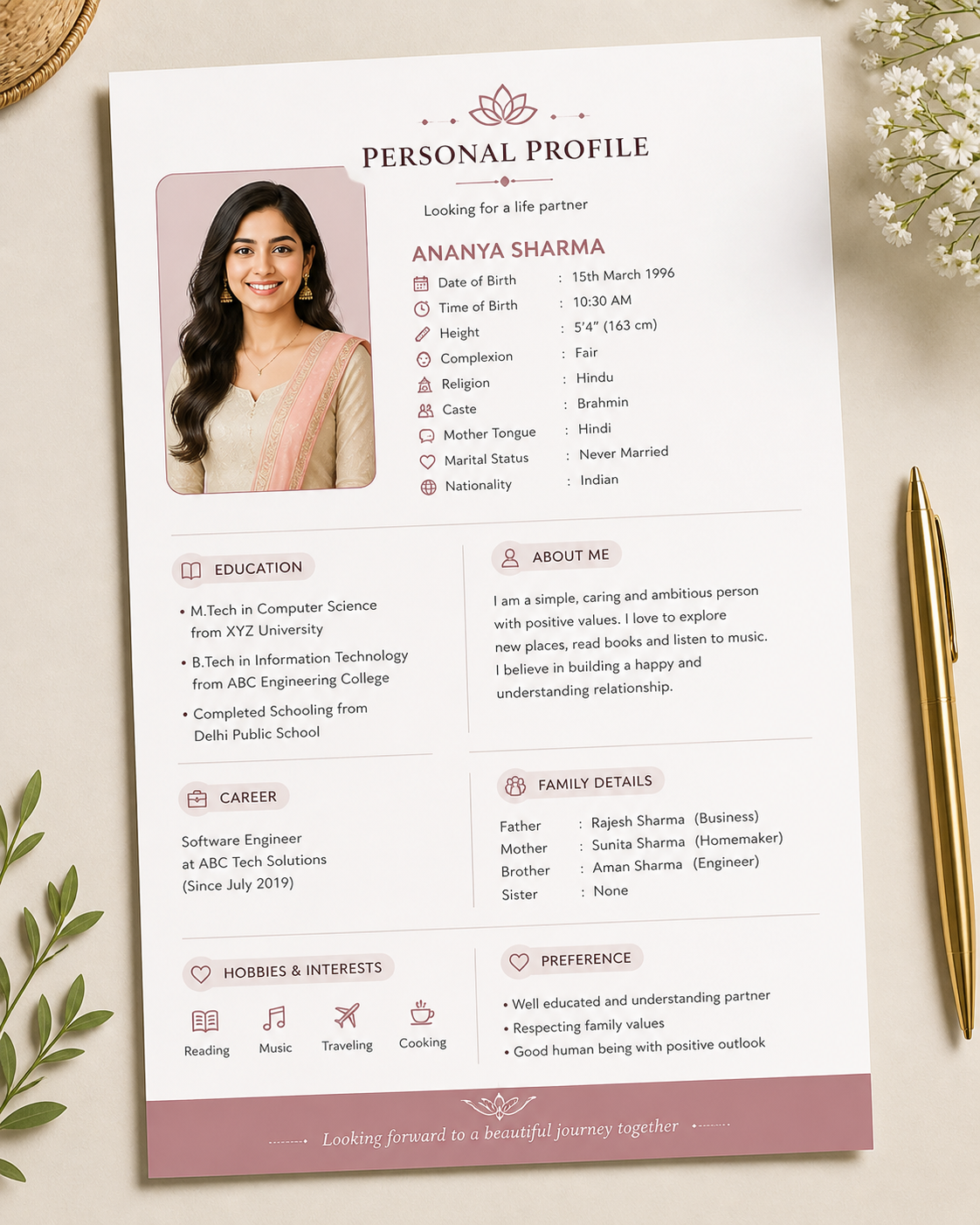
Example of a clean and modern marriage biodata format
What is a marriage biodata?
A marriage biodata is a short profile used for matrimonial introductions. It gives the other family a simple but meaningful overview of a person, their background and their family. In Indian settings, it helps people understand the basics before they move to the next stage of discussion.
It is different from a resume. A resume is written for jobs. A marriage biodata is written for families. That means the tone should feel personal but balanced, and the details should be relevant to a matrimonial conversation rather than a professional one.
Some families prefer a traditional layout, while others like a cleaner modern design. Both can work. What matters more is whether the biodata feels easy to read and complete enough to answer the most common questions.
Important details to include
If you want your marriage biodata format to feel complete, focus on the details people genuinely look for first. You do not have to write everything about yourself. You only need enough to create a proper introduction.
Personal details
- Full name
- Age or date of birth
- Height
- Religion, caste or community if your family wants to mention it
- Mother tongue
- Current city or hometown
This section should be clean and direct. Use short lines rather than turning every detail into a full sentence.
Education and work
- Highest qualification
- Field of study
- Current occupation
- Company, business type or work category
- Work location
This gives the other side a quick picture of your academic and professional background. You do not need to mention every past achievement unless it adds real value.
Family background
- Father's name and occupation
- Mother's name and occupation or homemaker detail
- Siblings and a short note about them
- Family location
In many Indian households, family details are important because marriage is often seen as a connection between families as much as between two individuals.
Personality and lifestyle details
- Hobbies and interests
- Food preference if relevant
- A short personality line
- Marital status
This section makes the biodata feel more human. A short line like "calm by nature, family-oriented, and enjoys reading" can be enough.
Photo and contact information
A clear recent photo is usually helpful. Keep it simple and natural. Contact details can be added directly or shared through parents, depending on what your family is comfortable with.
Quick option: If you already know the sections you want and only need a clean place to build them, create your biodata online and save time on formatting.
Tips to make it better
A biodata can have all the right details and still feel weak if the presentation is messy. Small improvements make a big difference.
- Keep the layout simple and spacious.
- Use short paragraphs and bullet-style details where needed.
- Make sure names, dates and spellings are correct.
- Use a photo that feels natural and recent.
- Write honestly instead of trying to sound overly impressive.
- Choose a format that your family can comfortably share on phone and PDF.
It also helps to think about the first reader. In many cases, parents or elders will see the biodata before the person does. So clarity matters more than decorative styling.
Common mistakes to avoid
Many biodata problems happen because people either overfill the page or leave out basic information.
- Do not write long self-praise paragraphs.
- Do not use too many fonts, colors or visual decorations.
- Do not leave the family section incomplete if that matters in your circle.
- Do not use old photos or outdated job details.
- Do not copy another format without checking whether it suits your own background.
Another common mistake is trying to make the biodata sound too polished. In real family settings, a simple and genuine profile usually creates a better impression than something that feels stiff or exaggerated.
Frequently asked questions
Should a marriage biodata be one page or two?
One page is usually enough. If your layout is spacious, a short second page can still work, but shorter and clearer is often better.
Do I need to include a photo?
In most cases, yes. A simple recent photo helps the biodata feel complete and easier to share.
Can I write my biodata in Hindi or Hinglish?
Yes. The language should match your family preference and the people who will read it first.
Can I make the biodata online instead of using Word?
Yes. You can create your biodata online if you want a faster and cleaner process.
Conclusion
A strong marriage biodata format is not about fancy writing. It is about putting the right details in a neat, clear and respectful order. When the format is easy to read, families can focus on the profile instead of struggling with the presentation.
Start with the important details, keep the wording simple, and do not overcrowd the page. If you want to turn this guidance into a ready-to-share document, create your biodata online and use a cleaner process from the beginning.